
A child’s growth is not a straight line — it’s a journey of learning and discovery.
Each child has their own rhythm — moments of rapid growth and moments that require time and patience.
Parents who understand the stages of their child’s development can help them grow physically, emotionally, and intellectually in a balanced way — without pressure or comparison.
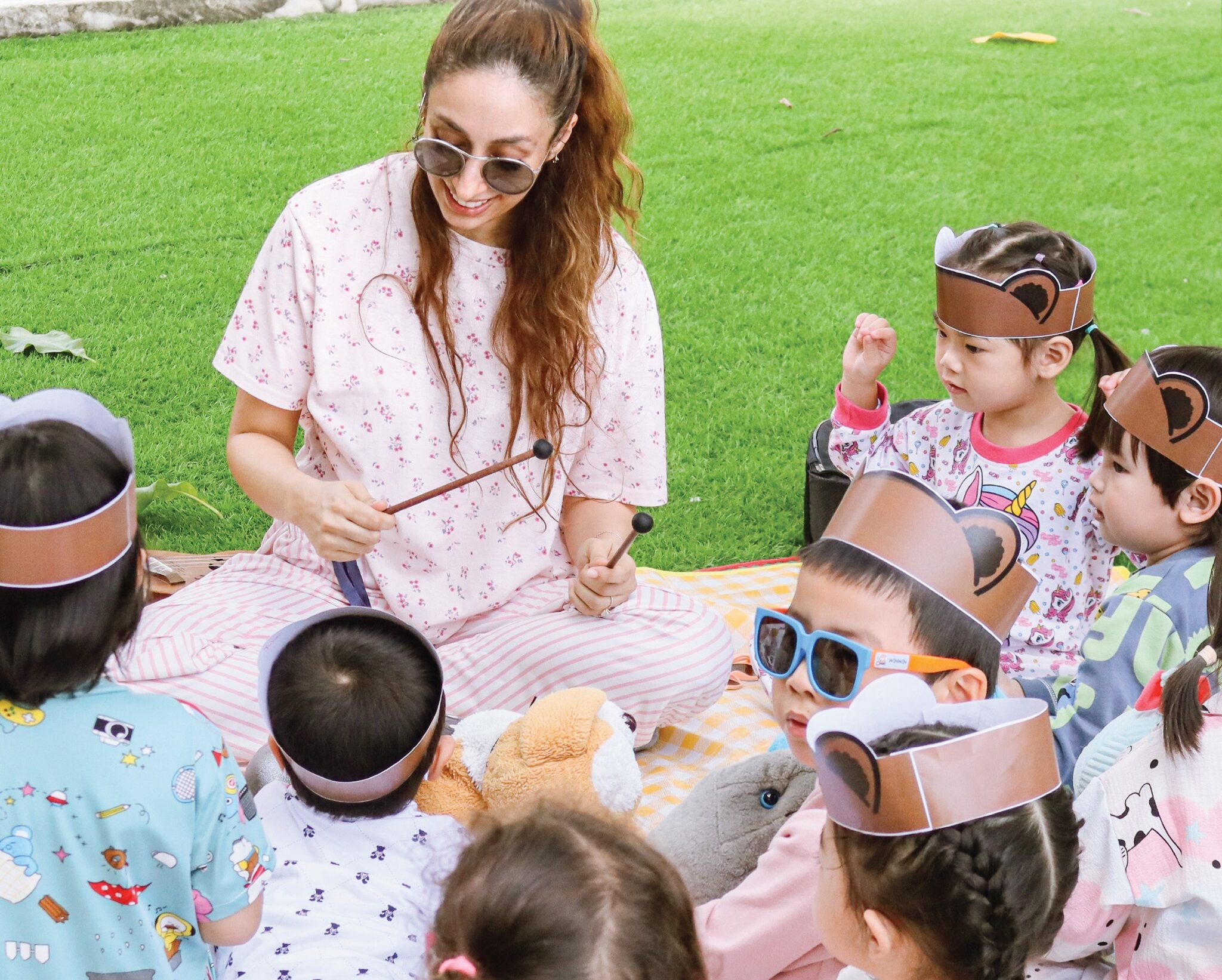
Birth to Age 2 — Building Security Through Love
The first two years of life are the “golden period of brain development.”
More than 80% of neural connections are formed during this time.
Babies learn about the world through their senses — they look at your face, respond to your voice, and smile back at your smile.
Every cuddle, every gentle touch, every bedtime lullaby teaches them that “the world is a safe place.”
You don’t need to overload your child with words or lessons. Simply be present.
Let them explore safely, touch toys of different textures, listen to soft music, and play peekaboo.
These little activities build focus, curiosity, and neural coordination.
At this stage, children don’t fully “understand language” — they understand emotion.
A calm voice, eye contact, and consistent affection are the greatest gifts you can give.
Ages 3–5 — The World of Imagination and Learning Through Play
In the preschool years, imagination blossoms.
A spoon becomes a microphone; a blanket turns into superhero wings.
These are not silly games — they are how the brain connects ideas and builds problem-solving skills.
Parents should give children freedom to play creatively.
Play is learning — it teaches children social skills, patience, sharing, and empathy.
At this age, children ask endless “why” questions — “Why is the sky blue?” “Why do I need a nap?”
Instead of answering right away, try asking, “What do you think?”
This encourages critical and creative thinking.
Don’t worry if your child speaks later than others or sometimes prefers solitude.
Every child has their own developmental clock — your job is to offer time, opportunity, and understanding, not pressure.
Ages 6–9 — Building Understanding and Self-Confidence
As children enter early elementary school, they begin to think logically and understand how things work.
This is the best time to develop skills in reading, writing, math, and reasoning.
Children need small successes to build confidence.
Praising effort — “You worked so hard on that!” — is far more powerful than saying “You’re so smart!”
It teaches them that effort, not perfection, is what truly matters.
Encourage responsibility with small tasks — clearing the table, watering plants, or helping cook.
This helps them feel valued and capable, forming the roots of independence and leadership.
Ages 10–12 — Discovering Themselves and Understanding Others
The preteen years bring change and complexity.
Children start seeking independence while also craving belonging and peer approval.
Their emotions may shift quickly — laughter one moment, silence the next.
This is natural. The brain is still learning to manage feelings.
Parents should listen more than judge.
Stay close, calmly present, and show that your home is always a safe space to return to.
At this stage, friends begin to play a huge role.
Children may try to “fit in” by mimicking peers.
What they need most from parents is understanding without pressure — allowing them to find their identity safely.
Encourage creative exploration — whether through art, sports, music, science projects, or storytelling.
Each discovery helps them build confidence, empathy, and self-awareness.
Age 13 and Up — Growing Into Independence
Adolescence isn’t just about physical change — it’s the awakening of thought and identity.
Teens begin asking deeper questions:
“What does this mean for me?”
“Who am I?”
“What do I want to become?”
They start defining their values, passions, and purpose.
Some may fall in love with music, sports, science, art, or community service.
This is how they form their sense of self.
They also crave independence — but still need a safe base.
Parents should shift from “controllers” to “guides.”
Instead of asking “Why did you do that?”, try “What do you think about what happened?”
This invites reflection and trust rather than defensiveness.
Adolescents may seem distant, but they are full of dreams and insecurities inside.
Your quiet presence, patience, and active listening build bridges of trust that last.
Creative and team-based activities — volunteering, science fairs, sports, digital media projects — help them develop collaboration, time management, and responsibility.
Real experiences turn thoughts into maturity and confidence.
Teenage years aren’t about rebellion — they’re about exploration.
Your teen is learning to balance freedom with responsibility, to value differences, and to understand that success takes patience and growth.
At Raffles American School Bangkok — Growing Through Every Stage
At Raffles American School Bangkok (RAS), we value holistic development — nurturing the mind, heart, and body.
Our programs go beyond academics to include arts, music, sports, and creative projects that encourage children to think, express, and connect confidently.
In every grade, students learn to work with others, listen to diverse perspectives, and express themselves respectfully.
We aim to nurture not just bright students — but kind, self-aware young people who understand themselves, appreciate others, and are ready to thrive in a changing world.